Joan Miró’s “The Bull Run” (1945) is a vivid, dynamic work that reflects his return to bold color, energetic movement, and symbolic imagery in the years following the Spanish Civil War and World War II. Painted during a period of renewed creative intensity, the piece channels both the chaos and vitality of life through Miró’s unmistakable visual language.
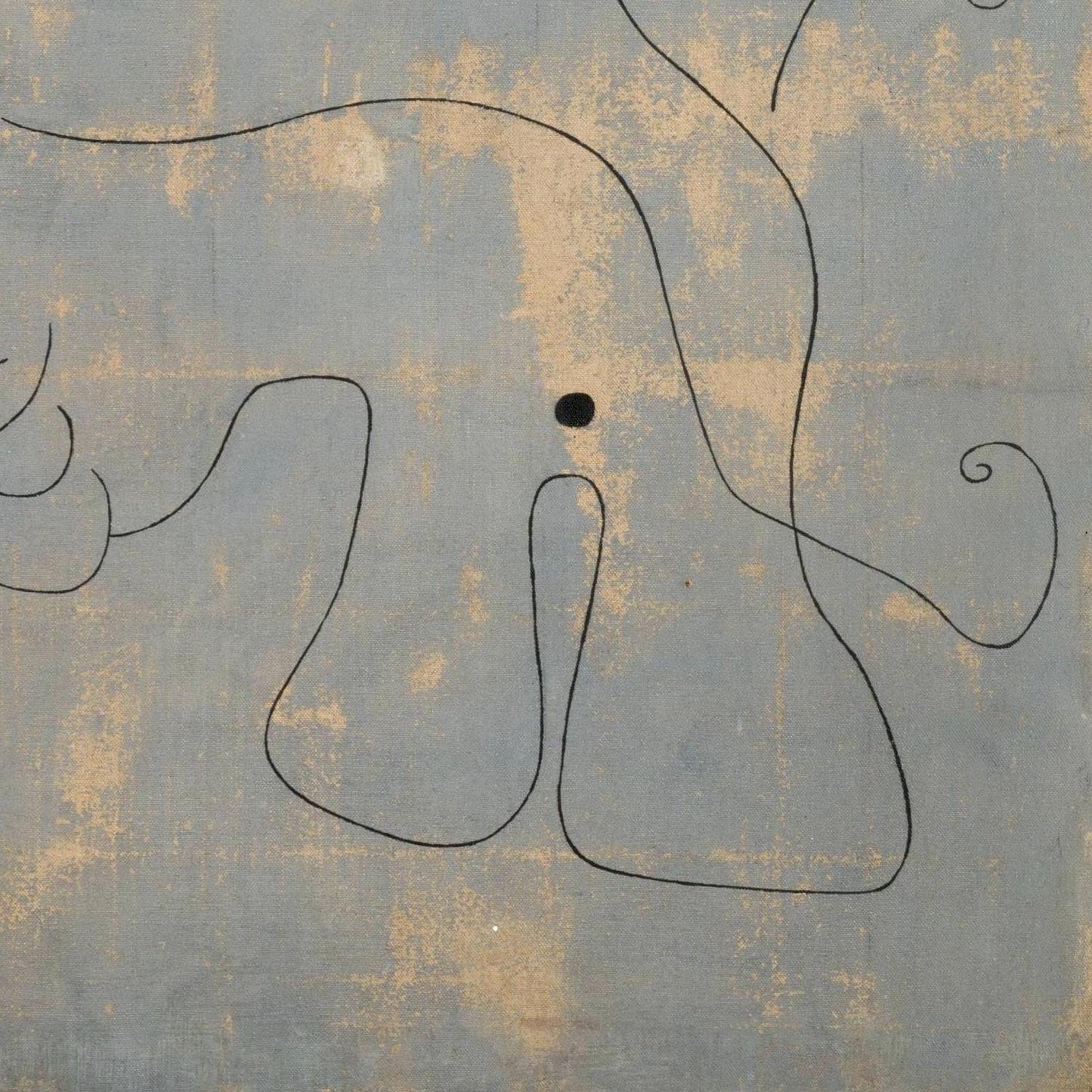
The composition is alive with explosive, rhythmic forms—arcing lines, jagged shapes, and animated symbols that swirl across the surface like a charged landscape. The imagery suggests the traditional Spanish bull run, yet Miró interprets the theme through abstraction: the bull becomes a powerful force of nature, conveyed not through literal depiction but through sweeping gestures, pulsating shapes, and vibrant color contrasts.
Rich blacks, fiery reds, deep blues, and flashes of yellow create an electric interplay that feels spontaneous yet masterfully balanced. Miró’s marks dance between control and abandon, giving the painting a raw, almost musical energy. Beneath the playfulness lies emotional depth—tension, exhilaration, and the primal sense of motion and unpredictability.
“The Bull Run” stands as a striking example of Miró’s mid-century work, capturing the spirit of Spanish tradition while pushing the boundaries of abstraction. It is both a tribute to cultural memory and an expressive surge of pure artistic freedom.