Couldn't load pickup availability
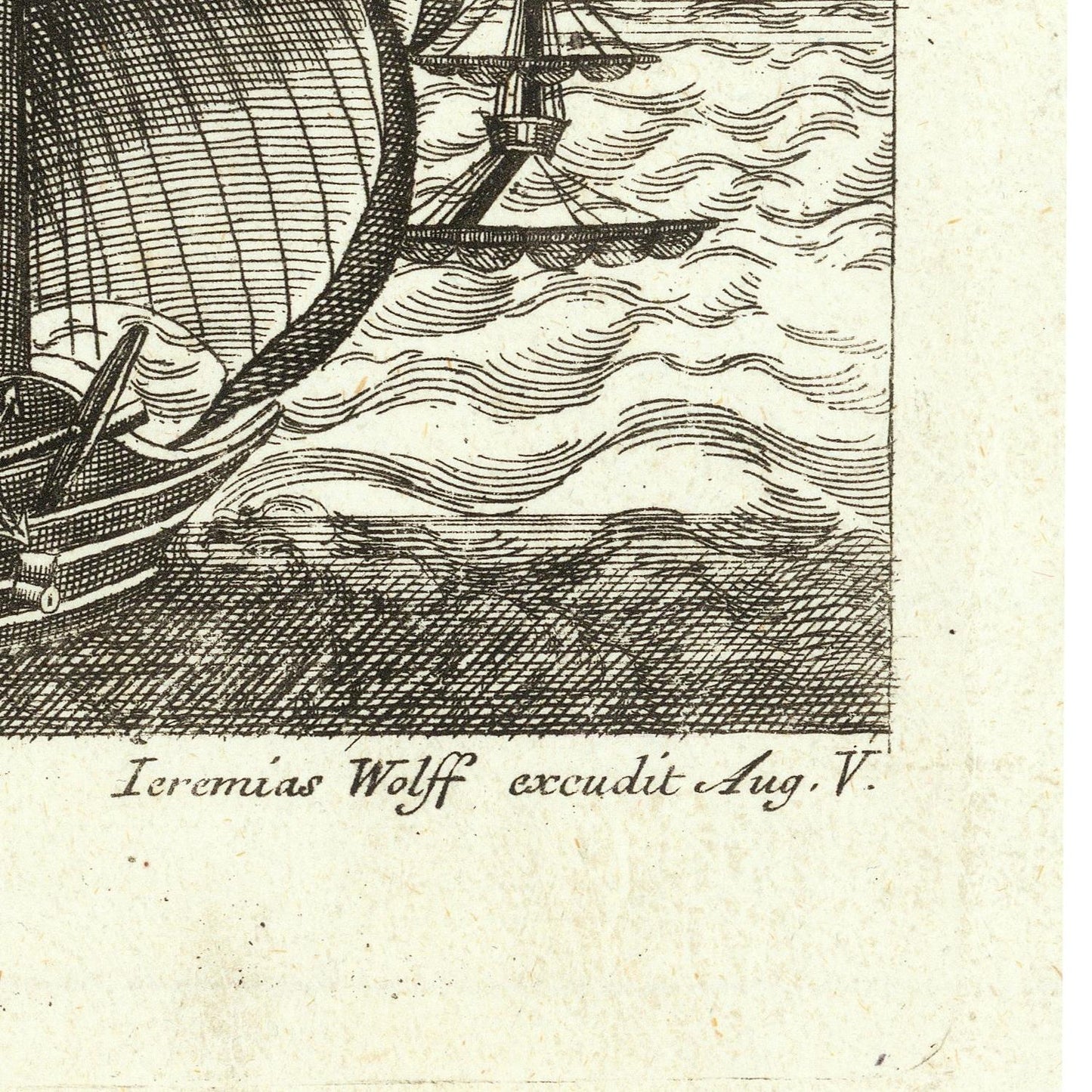
Jeremias Wolff and Friederich Bernhard Werner’s 1730 panorama of Lisbon is an exceptionally important historical view of the Portuguese capital, created approximately twenty-five years before the catastrophic earthquake of 1755. As a pre-earthquake depiction, the work preserves a remarkable visual record of Lisbon’s urban landscape at a moment when the city was still dominated by its historic medieval and early modern architecture.
Presented from an elevated perspective, the panorama reveals Lisbon stretching along the northern bank of the Tagus River, with the broad estuary forming a dramatic foreground. The waterfront is animated by numerous sailing vessels, boats, and maritime activity, reflecting Lisbon’s role as one of Europe’s great Atlantic ports. The city’s relationship with the river was fundamental to its commercial prosperity and to Portugal’s extensive connections with Africa, Asia, and the Americas.
The densely built urban landscape is dominated by numerous churches, convents, palaces, civic buildings, and defensive structures. Among the most recognizable features are the monumental religious and royal architecture that characterized Lisbon before the earthquake. The panoramic format allows the viewer to appreciate the dramatic topography of the city, with neighborhoods climbing the hills behind the waterfront.
The work is particularly significant because much of the Lisbon represented here was destroyed or profoundly altered by the earthquake, tsunami, and fires of November 1, 1755. Consequently, eighteenth-century views created before the disaster are invaluable sources for reconstructing the appearance of the lost city. This panorama offers historians and collectors an opportunity to examine Lisbon's architecture and urban organization before the rebuilding campaign that produced the more rational street plan of the Baixa district.
Friederich Bernhard Werner was a celebrated German architectural draughtsman and travel artist whose panoramic city views were admired for their detailed observation and dramatic presentation. The engraving was published by Jeremias Wolff, an influential Augsburg publisher whose workshop produced numerous illustrated works and city views during the early eighteenth century.
For collectors of Portuguese history, Lisbon, maritime cartography, architecture, and historical city views, this panorama is particularly desirable. Its importance extends beyond its artistic qualities: it is a visual document of a city that would soon undergo one of the most consequential urban catastrophes and reconstructions in European history.
The 1730 panorama therefore provides a rare and evocative glimpse of Lisbon before the earthquake, preserving the character of the Portuguese capital during the final decades of its pre-Pombaline era.
Materials
Materials
Cotton canvas, matte photo paper, fine art paper, pigmented inks.
- The canvas it's 99 % cotton, 450 gr/sqm;
- The matte photo paper it's acid-free (archival paper), 190 gr/sqm;
- The fine art photo paper it's satinated (semi-glossy), 140 gr/sqm.
Shipping & Returns
Shipping & Returns
Dispatching time: 1-2 days.
* Standard shipping fee: The orders will be sent by priority registered mail, usually via client National Post (USPS, Canada Post, Royal Mail, LaPoste, Deutsche Post, PostNL, etc). The delivery times are not guaranteed, sometimes it will take longer and these are beyond our control. Tracking number will be provided. Clients from US and Canada cannot track the parcels as the tracking numbers are not rolled in USPS and Canada Post systems.
* UPS standard: The orders will be sent with UPS expedited option. The delivery time it's between 5-11 days. Tracking number will be provided after dispatch.
* UPS express: The orders will be sent with UPS express saver. The delivery time it's between 4-7 days. Tracking number will be provided after dispatch.
Framing tips
Framing tips
Both type of materials, paper and canvas prints come rolled and will be need to be taken to your local framers.
The image it's printed with a border of 0.6 " (1.5 cm), for framing purposes only.
If you have already a frame, be sure you send us the exact size of the print that will fit inside the frame. We're printing on vectorial plotters so the size could slightly be more or less with 0.4" (1 cm).
If you plan to have the canvas print stretched on wooden frame, you'll need additional border, so please let us know after placing the order.
The images above was cropped from the image at the biggest size available (keeping the best quality and aspect /ratio), so, for good details please choose biggest dimensions that will suit your preferences / space.
Care Instructions
Care Instructions
The print media (canvas or photo paper) could be cleaned only with a dry, soft cloth.
Share

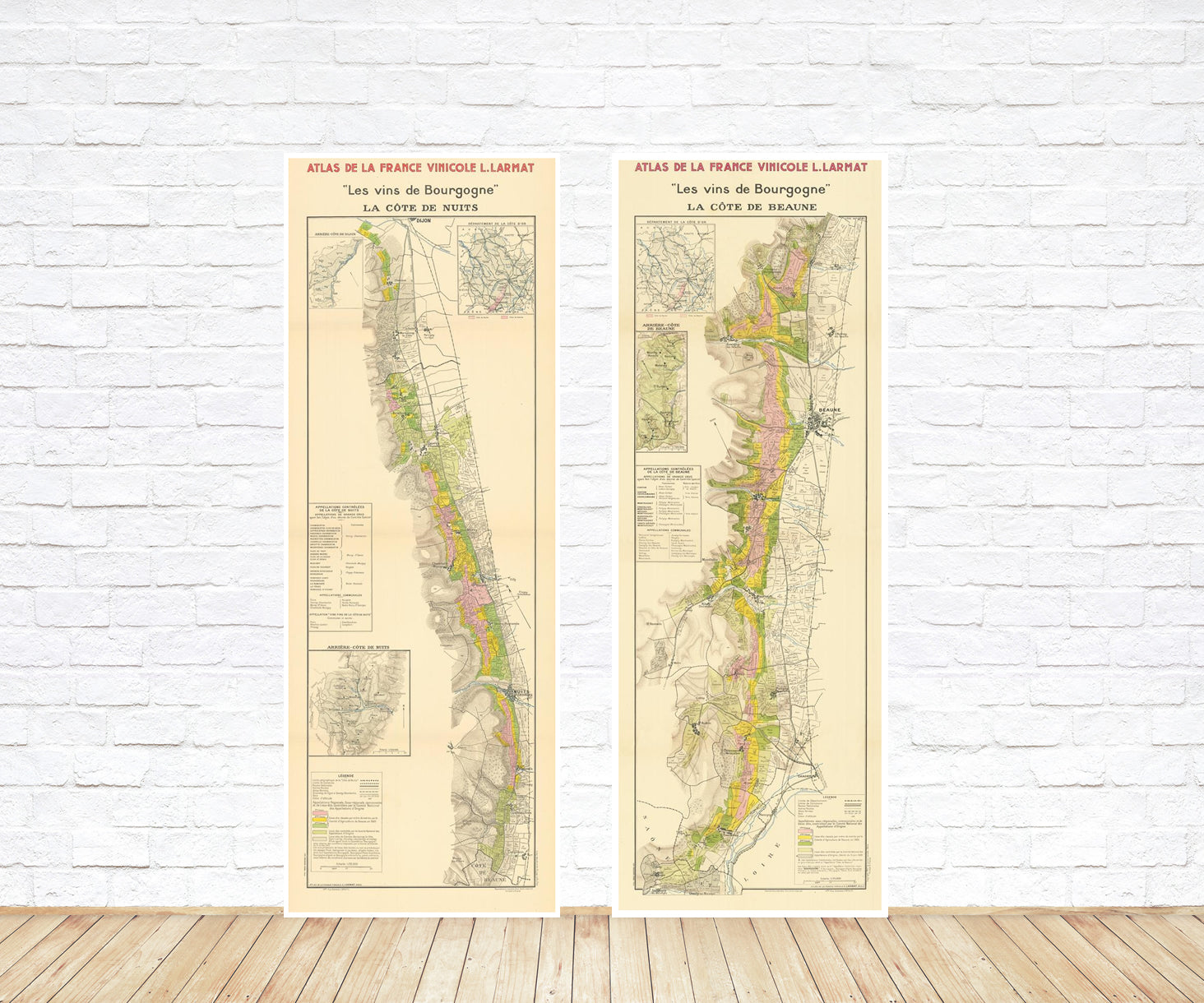
Wine maps
Explore the rich history of wine through centuries-old maps. Dive into the heritage, culture, and geography of wine regions with our collection of vintage wine maps.
These meticulously preserved historical treasures offer a window into the evolution of viticulture, showcasing how wine regions have transformed over the centuries.
-
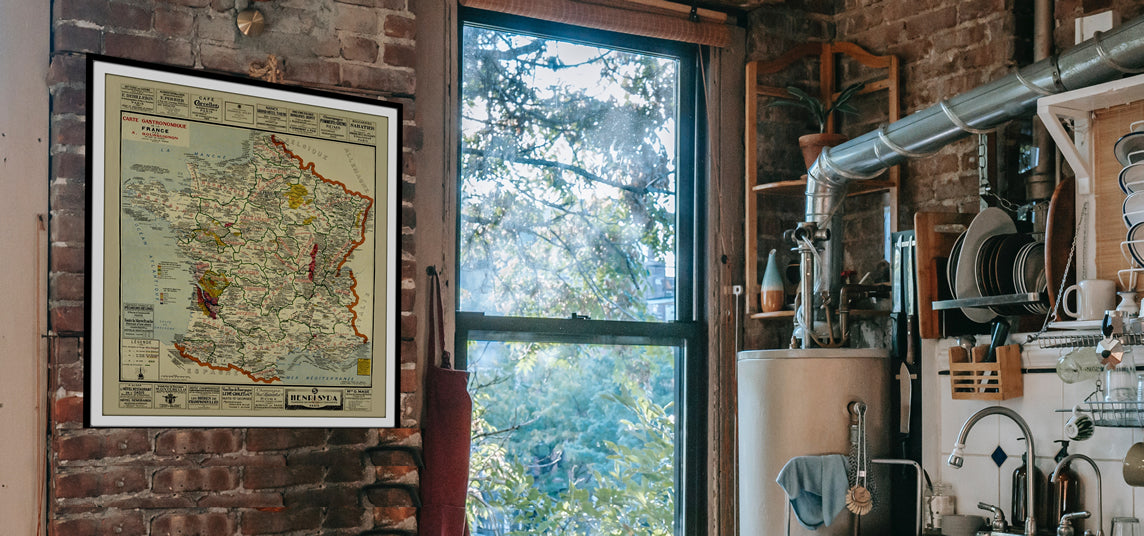
Gastronomic maps
Dive into a world of culinary exploration with our collection of gastronomic maps – your passport to gastronomic adventures like no other. Discover the intricate art of cheese-making and the exquisite world of gourmet delights through our meticulously curated Cheese Maps and Gastronomic Maps.
-
Empires maps
Travel through history as you explore the territorial expanse, conquests, and cultural influences of some of the world's most powerful civilizations. Our antique maps bring the epic tales of empires to life, offering a captivating glimpse into the rise and fall of these extraordinary realms. See all empires maps >