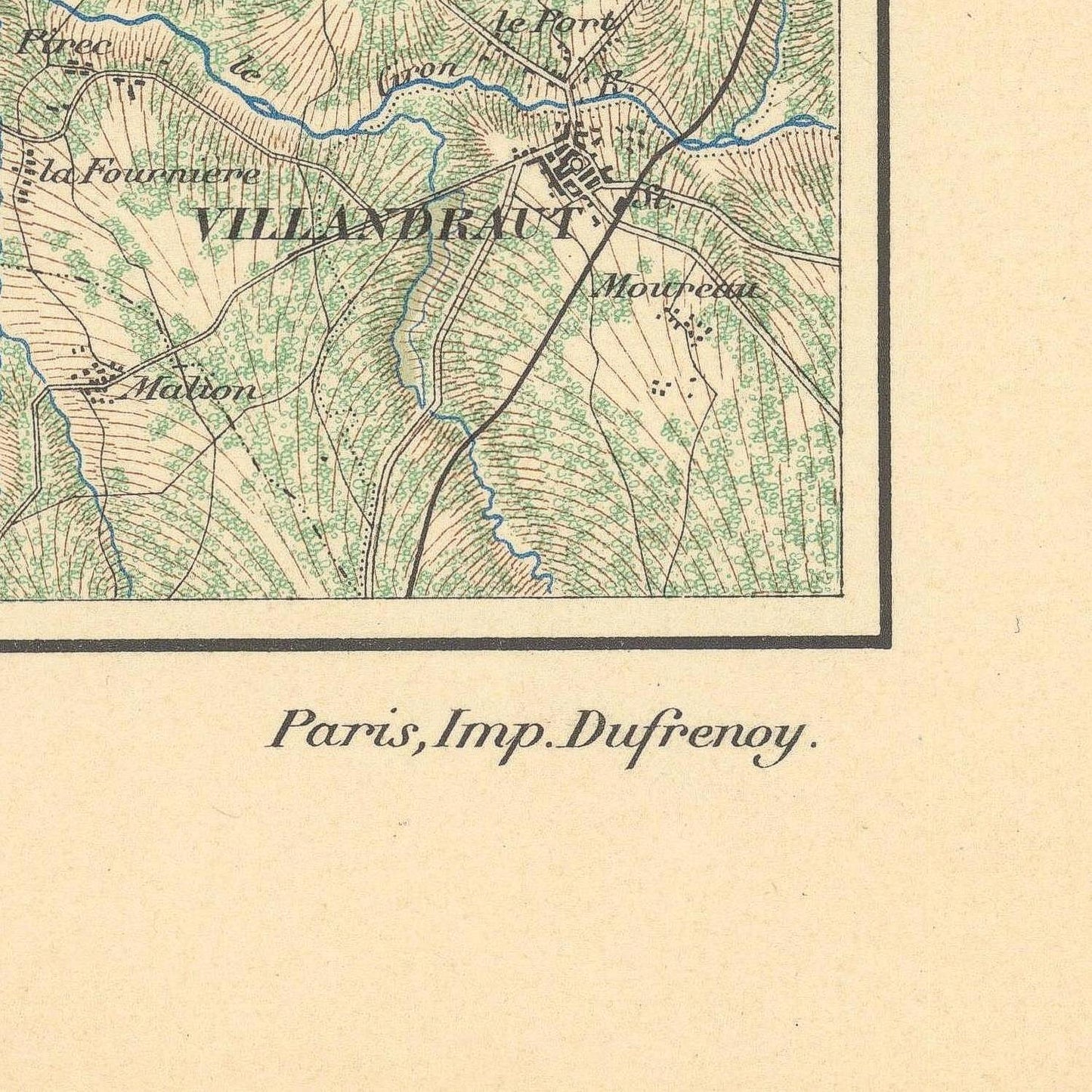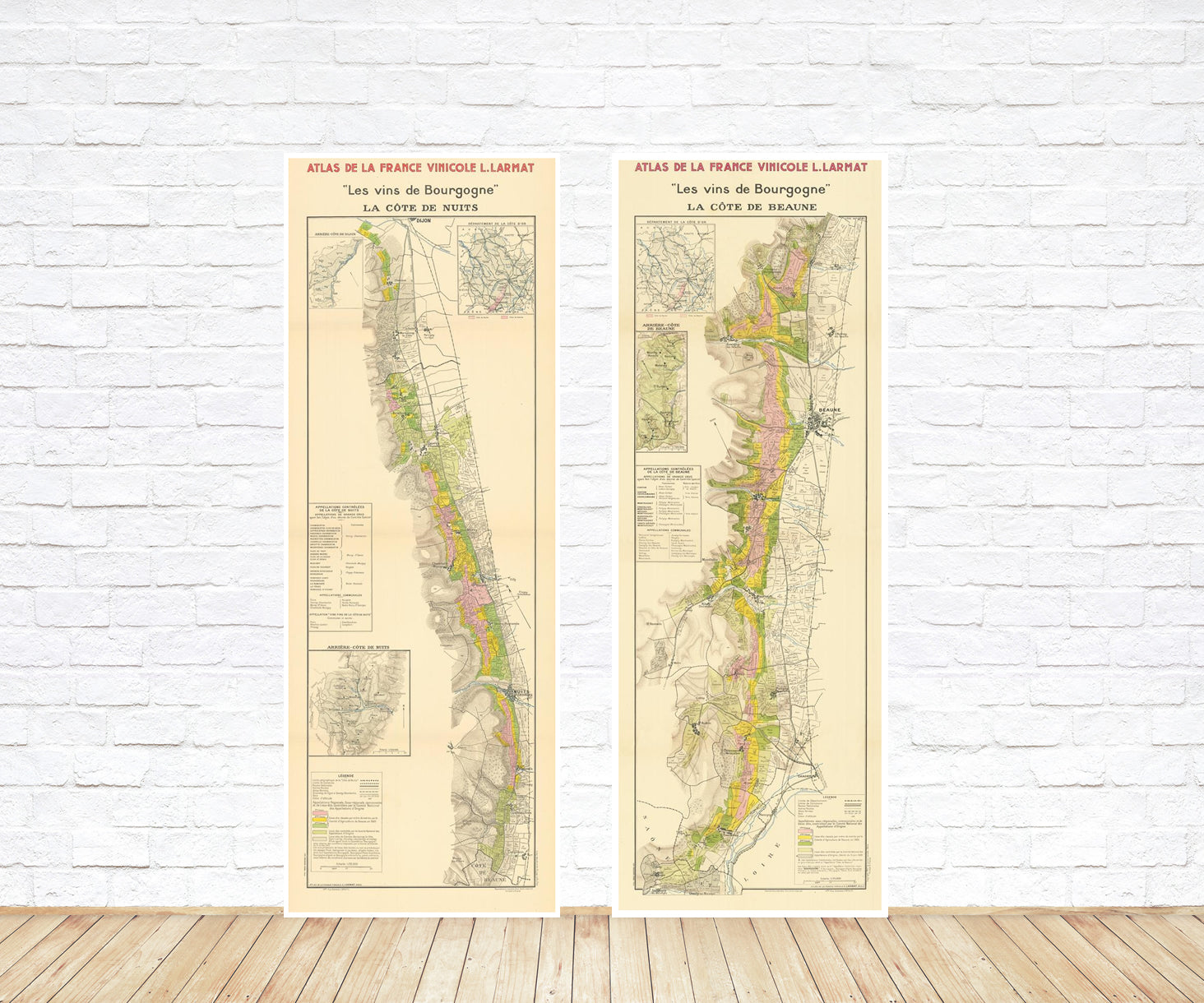


This finely detailed vintage map titled “Région des Graves et de l’Entre-Deux-Mers” presents a comprehensive cartographic view of two important wine regions surrounding the historic city of Bordeaux. Created in the elegant style of early twentieth-century French wine cartography, the map illustrates the vineyards, villages, rivers, and transport routes that define this influential part of the Bordeaux wine landscape.
At the western side of the composition lies the Graves region, located south of Bordeaux along the left bank of the Garonne River. This area is historically significant as one of the oldest wine-producing districts in Bordeaux. Its gravelly soils—reflected in the name “Graves”—provide ideal drainage and warmth for vines, producing both distinguished red wines and renowned dry and sweet whites. The map carefully marks numerous vineyard estates and small communes scattered across the rolling terrain south of the city.
To the east stretches the expansive region known as Entre-Deux-Mers, literally meaning “between two seas.” The name refers to the territory situated between the Garonne River and the Dordogne River. This broad and fertile area contains a dense network of rural villages, forests, and vineyards, historically known for producing fresh, aromatic white wines as well as a variety of regional Bordeaux blends.
The map’s long horizontal format follows the natural geography of the river valleys and emphasizes the relationship between waterways, transportation routes, and vineyard locations. Railways, roads, and small settlements are carefully engraved, illustrating how wine production and trade were historically connected to the infrastructure surrounding Bordeaux.
Subtle color shading highlights wooded areas and cultivated land, while precise typography ensures that hundreds of local place names remain legible. The result is both scientifically informative and visually balanced.
Today, this map stands as an important historical document that captures the geographic structure of the Bordeaux wine region. At the same time, its refined design and panoramic layout make it an attractive decorative piece celebrating the enduring heritage of French viticulture.