Kan beschikbaarheid voor afhalen niet laden
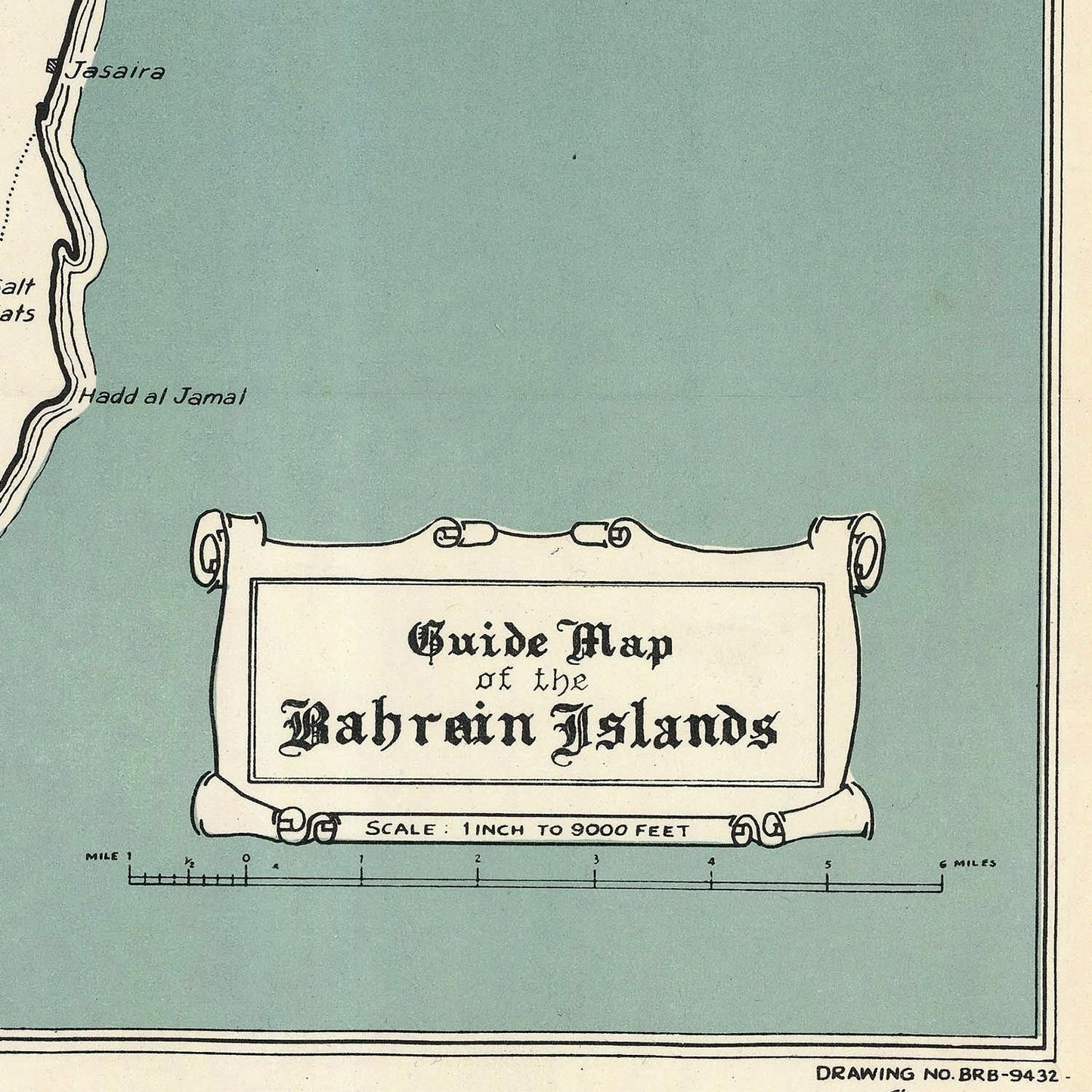
James Belgrave’s Guide Map of the Bahrain Islands (1953) is an important mid-twentieth-century cartographic document reflecting Bahrain’s transition from a traditional Gulf society to a modern, oil-driven state. Produced during a period of rapid economic and infrastructural development, the map was designed as both a practical guide and a visual statement of modernization.
The map depicts the Bahrain archipelago with clear emphasis on Bahrain Island and Muharraq, highlighting towns, villages, road networks, causeways, and coastal features. Manama appears as the administrative and commercial center, while ports, airfields, and industrial sites signal the growing importance of trade and petroleum infrastructure. Roads are prominently shown, underscoring the expansion of internal connectivity in the years following the discovery of oil in 1932. Smaller settlements, palm groves, and coastal contours are carefully rendered, offering insight into the spatial organization of the islands before large-scale urban expansion.
Stylistically, the map is utilitarian and legible, favoring clarity over ornament. Its restrained graphic design reflects postwar British cartographic conventions, with clean linework, standardized symbols, and a balanced layout suitable for administrative, commercial, and educational use. The map’s English labeling reflects Bahrain’s status as a British-protected state at the time, as well as its increasing engagement with international audiences.
Historically, the map is closely associated with Sir James Belgrave, the long-serving British adviser to the rulers of Bahrain. As such, it embodies the administrative perspective of governance, planning, and modernization promoted during his tenure. Today, the Guide Map of the Bahrain Islands is valued as a historical record of Bahrain’s landscape prior to extensive land reclamation and urban growth. It captures a pivotal moment in the islands’ evolution, when traditional geography and emerging modern infrastructure coexisted in a rapidly changing Gulf society.
Materials
Materials
Cotton canvas, matte photo paper, fine art paper, pigmented inks.
- The canvas it's 99 % cotton, 450 gr/sqm;
- The matte photo paper it's acid-free (archival paper), 190 gr/sqm;
- The fine art photo paper it's satinated (semi-glossy), 140 gr/sqm.
Shipping & Returns
Shipping & Returns
Dispatching time: 1-2 days.
* Standard shipping fee: The orders will be sent by priority registered mail, usually via client National Post (USPS, Canada Post, Royal Mail, LaPoste, Deutsche Post, PostNL, etc). The delivery times are not guaranteed, sometimes it will take longer and these are beyond our control. Tracking number will be provided. Clients from US and Canada cannot track the parcels as the tracking numbers are not rolled in USPS and Canada Post systems.
* UPS standard: The orders will be sent with UPS expedited option. The delivery time it's between 5-11 days. Tracking number will be provided after dispatch.
* UPS express: The orders will be sent with UPS express saver. The delivery time it's between 4-7 days. Tracking number will be provided after dispatch.
Framing tips
Framing tips
Both type of materials, paper and canvas prints come rolled and will be need to be taken to your local framers.
The image it's printed with a border of 0.6 " (1.5 cm), for framing purposes only.
If you have already a frame, be sure you send us the exact size of the print that will fit inside the frame. We're printing on vectorial plotters so the size could slightly be more or less with 0.4" (1 cm).
If you plan to have the canvas print stretched on wooden frame, you'll need additional border, so please let us know after placing the order.
The images above was cropped from the image at the biggest size available (keeping the best quality and aspect /ratio), so, for good details please choose biggest dimensions that will suit your preferences / space.
Care Instructions
Care Instructions
The print media (canvas or photo paper) could be cleaned only with a dry, soft cloth.
Share

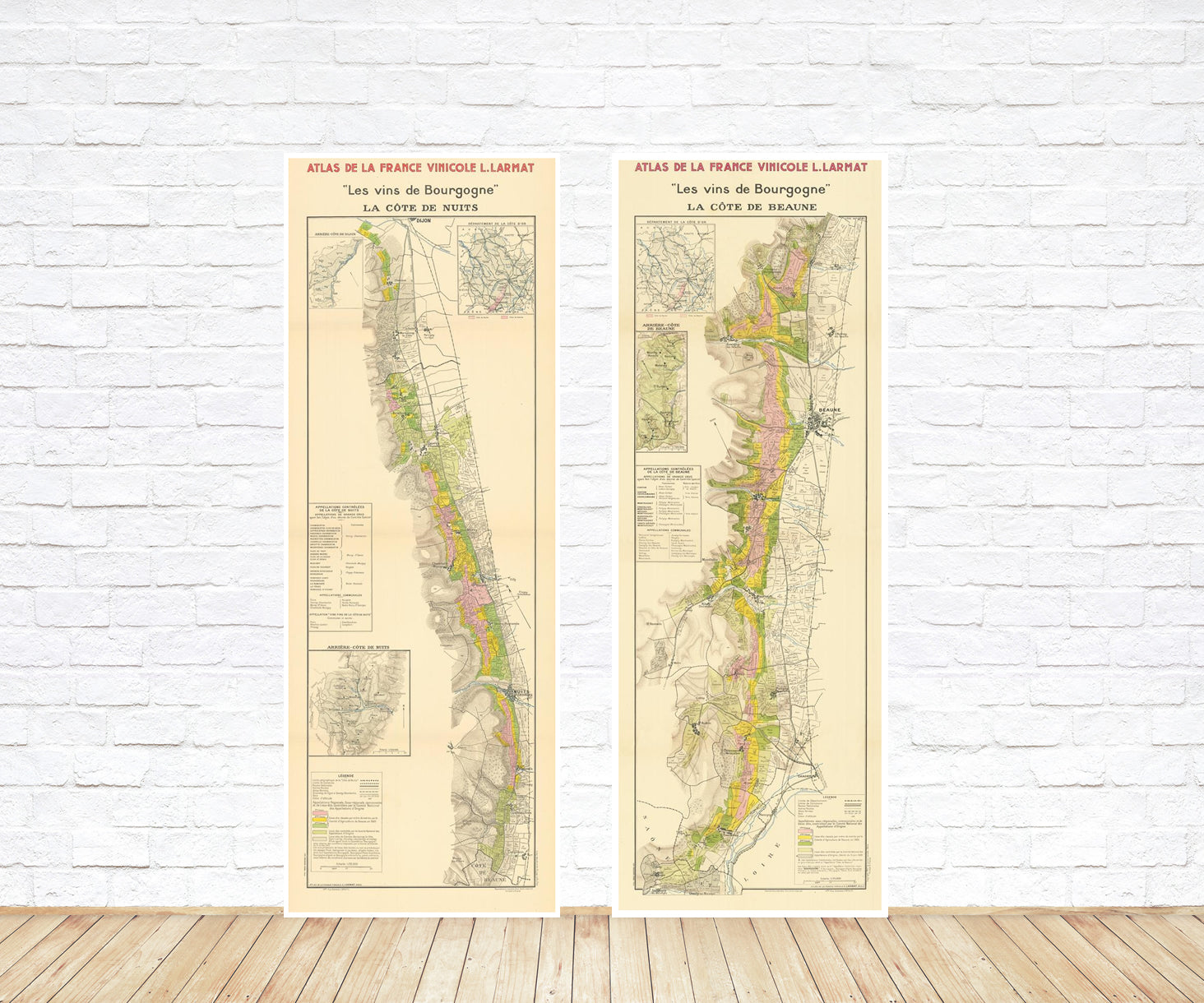
Wine maps
Explore the rich history of wine through centuries-old maps. Dive into the heritage, culture, and geography of wine regions with our collection of vintage wine maps.
These meticulously preserved historical treasures offer a window into the evolution of viticulture, showcasing how wine regions have transformed over the centuries.
-
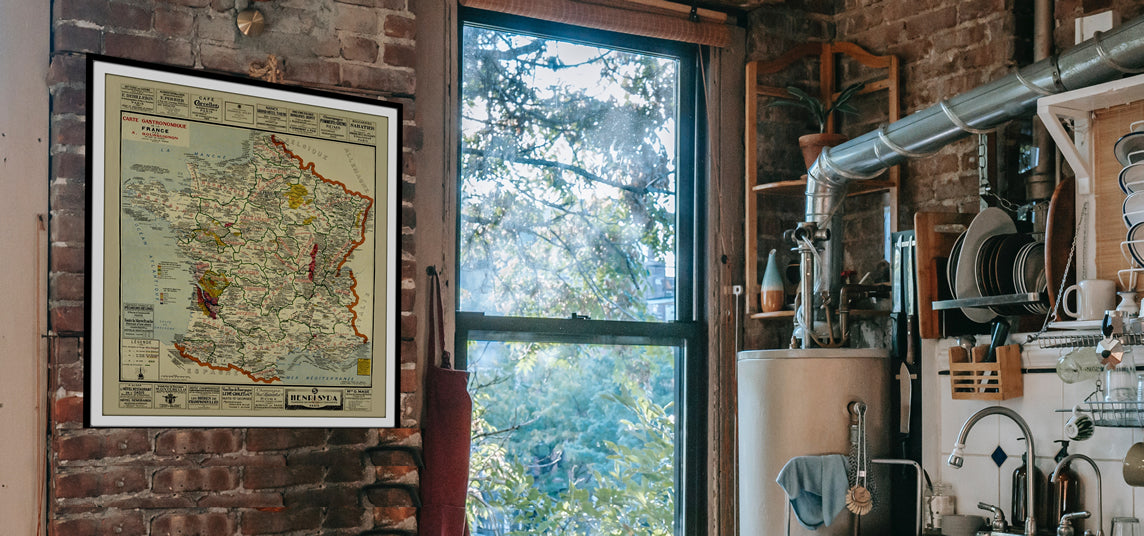
Gastronomic maps
Dive into a world of culinary exploration with our collection of gastronomic maps – your passport to gastronomic adventures like no other. Discover the intricate art of cheese-making and the exquisite world of gourmet delights through our meticulously curated Cheese Maps and Gastronomic Maps.
-
Empires maps
Travel through history as you explore the territorial expanse, conquests, and cultural influences of some of the world's most powerful civilizations. Our antique maps bring the epic tales of empires to life, offering a captivating glimpse into the rise and fall of these extraordinary realms. See all empires maps >